
At one point or another, almost everyone has called someone the wrong name. For a teacher, there are sometimes more than 100 student names that need to be memorized. And for a student, there are probably even more. Therefore it’s difficult to discern where and when mistaking a person for someone else was a simple slip of the mind, or an underlying bias that may reveal a larger phenomenon.
Some students at Harrison High School have shared that they have been called the wrong name by teachers, most of the time they are being mistaken for others similar in ethnicities across all races. For example, many Asian-American students report their misidentification occurring very far into the course of the school year, increasing their frustrations. Honest mistakes are made all the time without fault – however, repeated errors have the possibility to make the person feel unseen, and to be blended in with the racial group they are confused with.
Some students are shocked at the extent this misidentification can get to. At one point during class, I witnessed a teacher called an Asian American sophomore by the wrong name, also misidentifying her for a male student. The student who experienced this commented, “It made me feel kind of embarrassed, my teacher called me the wrong name in front of everybody.” Although many of these cases are often brushed off as simple mistakes, making light of these situations has the possibility of making the misidentified student feel underappreciated, as if nothing else stands out about them. In the world, there are many cases of misjudgments that stem from a racial bias too deep to possibly be intentional. However, the more these problems are ignored, the more potential remains that they aren’t being taken seriously.
So why aren’t students sharing these experiences with the school? Mira McKell, a sophomore at Harrison shares her experience of being called multiple names several times in her freshman year. “I feel like some people wouldn’t really listen to me,” she explained when asked why she hasn’t brought up her concerns to the school, revealing her discomfort and how common this problem is. Kat Wong, a sophomore, shares, “What’s stopping me (from reporting a potential incident) is that people might not think it’s a big deal.” Incidents like these impact students daily on a psychological level, and have the potential to escalate further if dismissed by students.
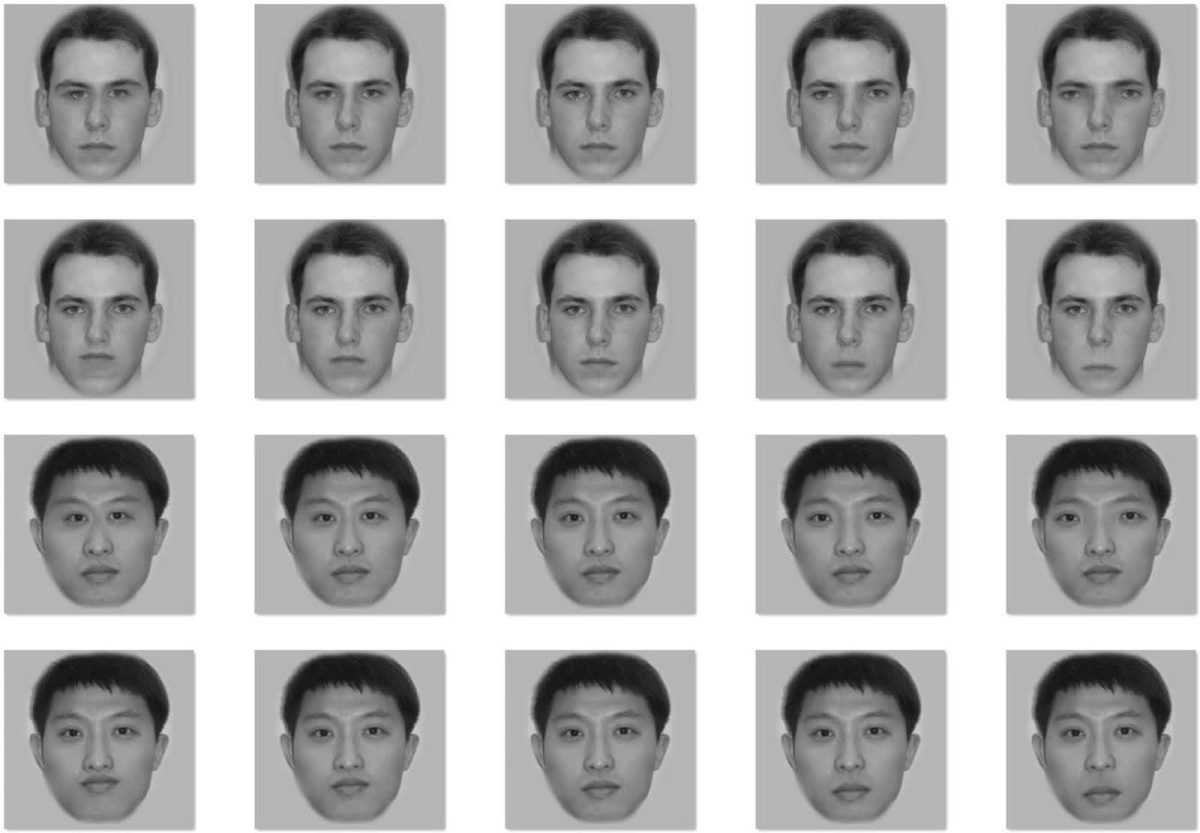
As for the science behind these mistakes, it’s not that simple. A person has more difficulty identifying the face from a racial group other than their own. This is called the cross-race effect. A 2011 Northwestern study revealed differences in brain activity when memorizing same-race individuals compared to different-race individuals. “People tend to have more frequent and extensive interactions with same-race than with other-race individuals, particularly racial majority members,” the study explains, “as a result, their brains may be less adept at finding the facial information that distinguishes other-race faces from one another compared to distinguishing among faces of their own racial group” (Northwestern University, 2011).
The frustration stemming from the students’ interpretations of these events is a phenomenon called microaggression, according to the University of Utah Health They end up feeling less than or uncomfortable with how they are perceived after experiencing bias. Unfortunately, this can quickly escalate to feelings of isolation within the classroom, low self-esteem, and resentment at oneself for being mixed in with their racial crowd. Audrey Cheung, a junior at the school, describes her irritation with situations like these, saying, “You’re tied to your name and it could get confusing or even hurtful if the people don’t make an effort to remember your name and instead go off by what you look like.”
While it is difficult to talk about this thin line of misunderstanding versus racial bias, it is crucial to make sure the students of Harrison feel safe in their class communities. Students already describe Harrison High school as having very low levels of racial bias. Continuing to create and nurture a supportive environment is arguably just as important as grades or performance. Making small but conscious efforts to just remember a student’s name goes such a long way. Ms. Reilly, a 10th grade English teacher offers insight, saying, “I really look at the faces of my students, and I prioritize trying to remember the face with the name within the first week of school.” 9th grade English teacher Mr. Brill shares, “Students deserve to feel valued and seen in the classroom. I try to immediately correct my mistakes after calling someone by the wrong name.” Principal of Harrison High School, Ms. Beukema encourages students and teachers to be aware of this situation, sharing, “There’s no better way to show a student that they don’t belong by not calling them by their name or correctly pronouncing their name.”
So no matter who you are, what can you do to minimize these experiences? And if this has ever happened to you, how can you share your story? All student voices are important, no matter how small of a deal we believe it is. Ms. Beukema invites all members of Harrison High to consider the impact we all have on others; “Every word, every action, everything you do, we always focus on how much they matter because there is a ripple to all of those effects happening on a student.”