
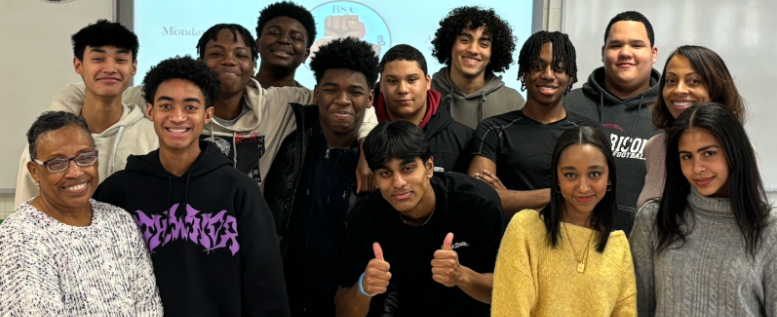




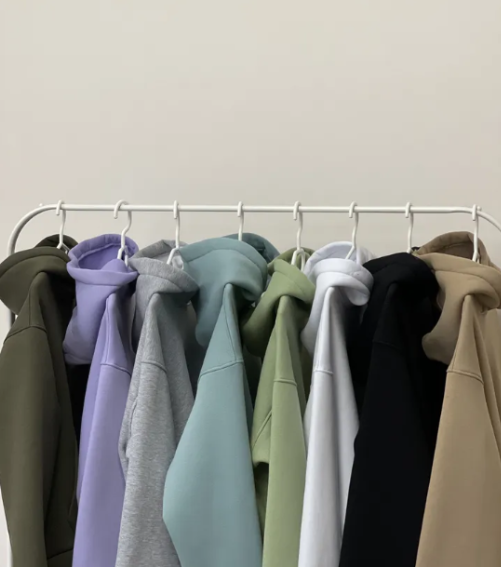

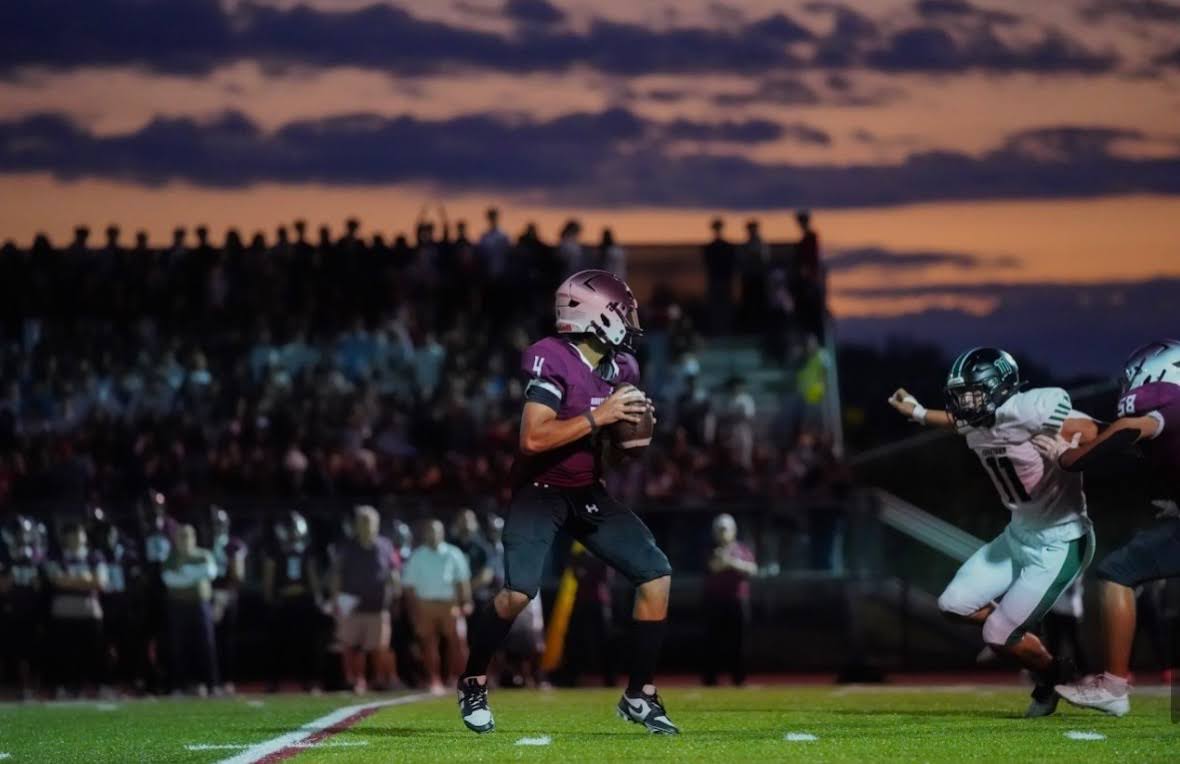
Harrison High School does not have a uniform, but in a way, it does. At 7:40 a.m., when the halls begin to fill up, almost every student is wearing the “uniform”: oversized sweatshirts, identical sweatpants, and probably a pair of Uggs. Students today are valuing comfort in what they wear, leaving fewer opportunities for self expression and individuality. The question is why: why is style itself not as important to students, and how has our world today influenced this?
There are over 1,000 students at HHS, each with unique interests and hobbies. However, when working your way through the hallways in between periods, one thing is apparent: students may be caring less and less about what they put on before coming to school every day. In fact, most have opted for just a pair of sweatpants and a sweatshirt, sometimes pajama pants. A survey was conducted at HHS and answered by a variety of students from different grades and social circles. According to Figure 1, 70%* of respondents said that a combination of style and comfort is important to them when dressing for school, showing potential for more consideration being put into clothing choices. According to Figure 2, 50%* of respondents said that they believe their peers aim to dress comfortably, not caring as much about style, creating the idea that maybe students do notice clothes and fashion at school. An important fact to take into consideration is that only two of 19 respondents reported style being an important factor to them when choosing clothing for school.
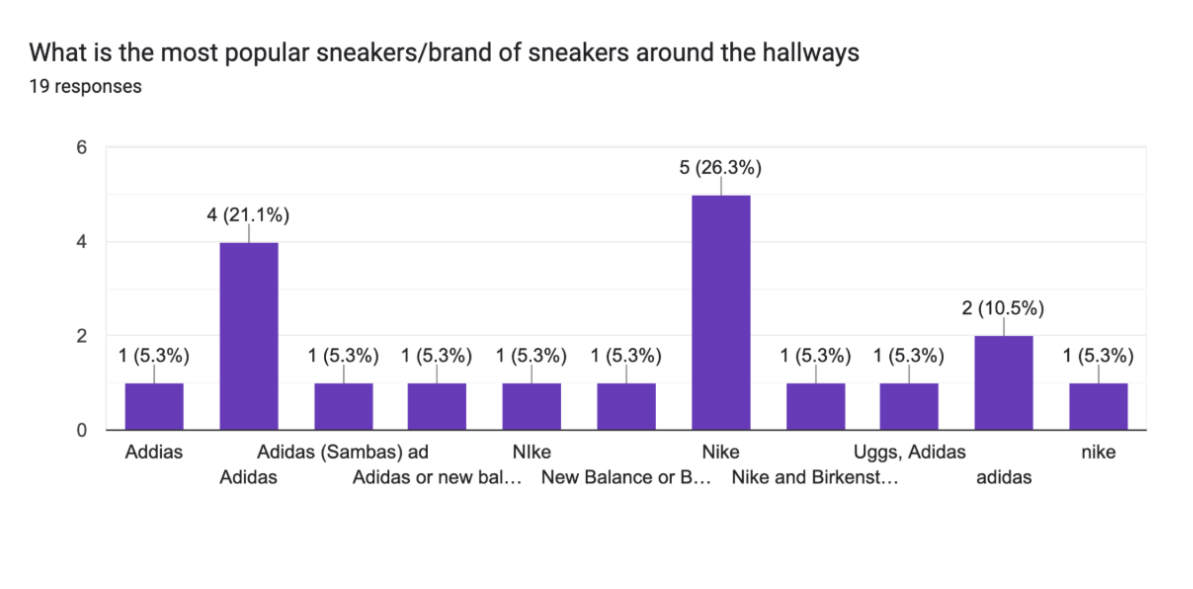
Although students prefer comfort, they do care about their brands. According to the survey, Nike, Aritzia, Alo, Essentials, and Comfrt, among others, are the favorites of many students. These brands are all at different “levels” (price, status, etc.) but part of the same fashion ecosystem. Brandy Melville, Parke, Comfrt, and Garage are fast-fashion, TikTok popular, trend, and hype driven brands. Aritzia, Alo, Essentials, and Nike are similar, but at a slightly higher price point. The biggest parallel between these two categories is the Gen Z target market (clearly successful at HHS), social media drive, and modern-casual aesthetic. The answer to why these brands, that for the most part all sell the same product, are so popular in high schools across the country and HHS is because they don’t just sell clothing—they sell different versions of an identity. An identity that almost all high schoolers want to have: fitting in but still feeling like they tried. Wearing sweatpants and sweatshirts is one thing, but in the eyes of most, brands bring status, and that’s what some students strive for. Every student wants to fit in while still feeling important.
These trends are popular at HHS and in many other high schools across the country, but it was not always like this. High school clothing trends have shifted from formal attire to casual and individualized styles. This evolution reflects social changes in self-expression, gender equality, and the predominant relaxation of school dress codes. This shift may explain why the clothing choices of many students at HHS look the way they do. As well, it shows how social media has shaped and had an impact on almost every aspect of our world.
Today, trends likely occur in high school because of a popularity loop, rooted in social media, especially platforms like TikTok and Instagram. Once a few people on social media start wearing something, others copy, it becomes “normal”, then not wearing the item feels like standing out so those who haven’t worn it yet adopt it. Eventually, this item will go out of style and the cycle will continue with a new item or style. This also contributes to fast fashion and the effect of fashion on our ecosystem. The mass production of casual clothing has made comfortable attire more affordable and because of this, wildly popular (evidence of this in the halls of HHS). As well, social media has allowed fashion trends to circulate at a faster rate than ever before, no wonder, according to Figure 4, 60%* of students surveyed said they believe most students at HHS dress similarly.
According to Figure 4, surveyed students are saying everyone dresses the same, however there is even more overlap in clothing choices when it comes to social circles. According to Figure 3, 70%* of students surveyed believe friend groups and clothing are connected. This relationship is clear to outsiders and students alike. To begin with, there is a relationship between conformity and peer acceptance, so this makes the social circle/clothing choice connection understandable. Being individual when a large group is alike can be intimidating, which explains why we are seeing less individual styles and more students are opting for trends. The unfortunate truth is, less students are dressing for themselves and they’re dressing to avoid standing out.
An anonymous student surveyed said, “This makes me wonder why and how fashion choices occur in our school.” A reason many students might dress the way they do is because they might not think about it unless the topic is brought up to them. Because it seems fashion is not a priority to most students, they may immediately fall to the default trends when dressing. This also opens doors for questions about the future. If fashion becomes a common topic among students, how would that change choice and expression through clothing?
Not every student connects with fashion and that is understandable. However, everyone connects to individuality and identity no matter their interests or choices. Self expression is one of the most important parts of human life; all people have the need to share themselves with those who surround them. Not only does expressing yourself make you feel good, it goes much deeper. According to the American Psychological Association, self-expression and individuality are vital for our mental health by raising self-esteem, reducing stress, strengthening self-acceptance, and boosting creativity. So, this is where the lack of individuality in popular fast fashion trends becomes harmful. Conformity in fashion can create a loss of confidence in many teens who feel that the clothes they wear do not represent them properly. Additionally, clothing is one of the best ways to express yourself without having to say any words, while trends that demand conformity close off this outlet of self expression.
At first glance, fashion at HHS seems casual but it truly reflects a deeper meaning guided by the sociological state of our world and an increase in social media influence. Self expression has seemingly become more of an afterthought, with students prioritizing comfort and fitting in. However, if awareness grows and conversations about this issue increase, there is emerging potential for students to use fashion intentionally and meaningfully while still feeling their best.
* = Approximate, rounded data, not the exact number
Survey Responses/Data:
Figure 1:
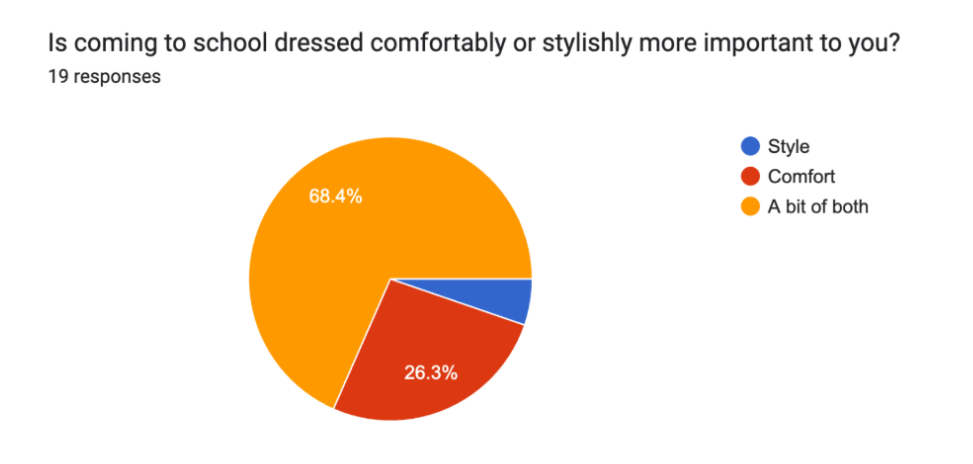
Figure 2:
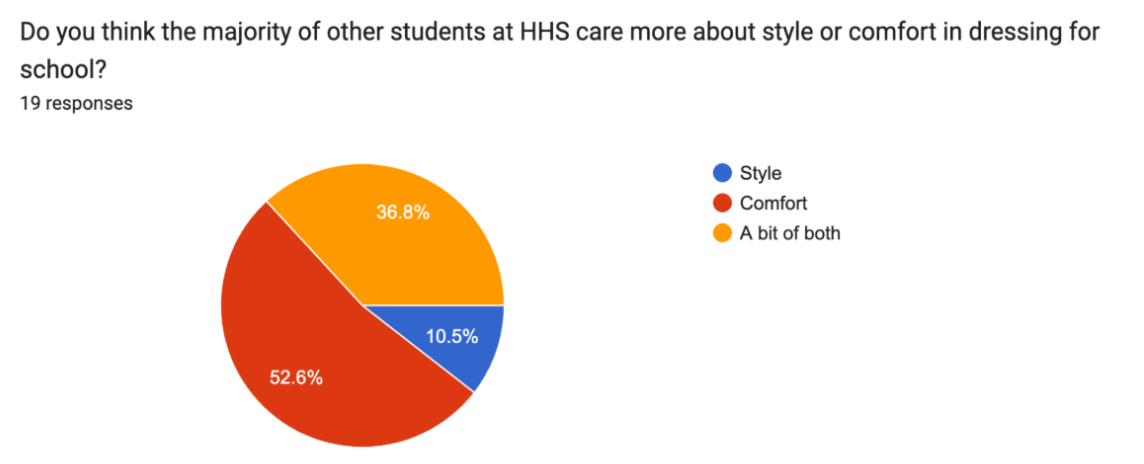
Figure 3:
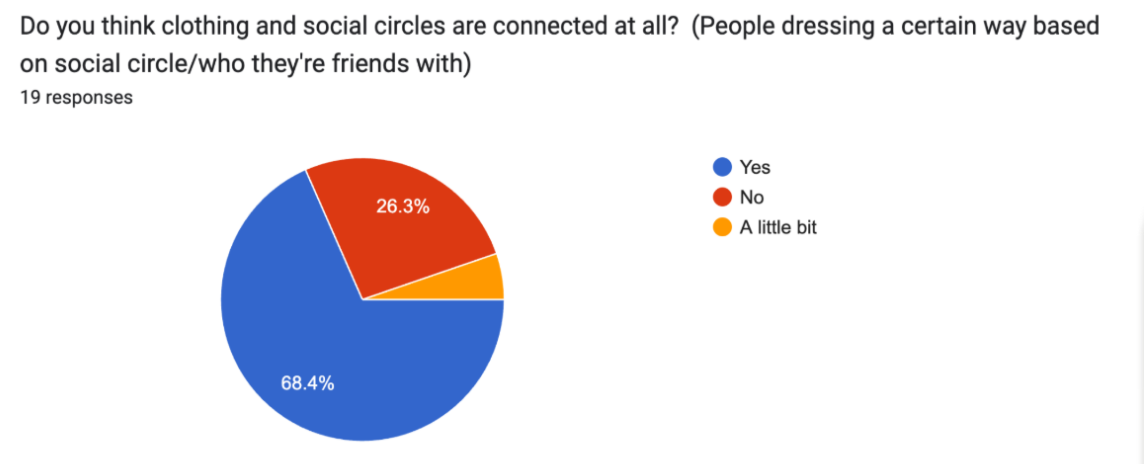
Figure 4:
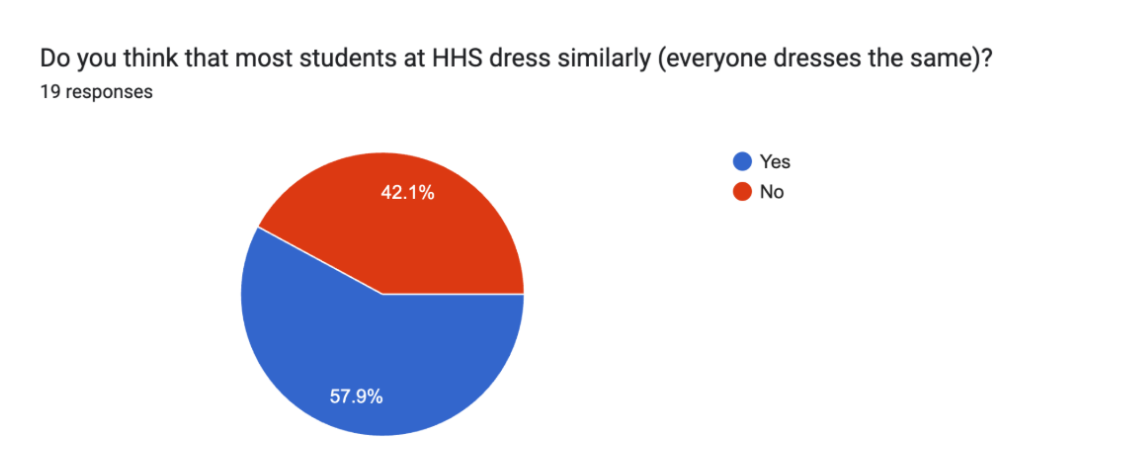
Figure 5:
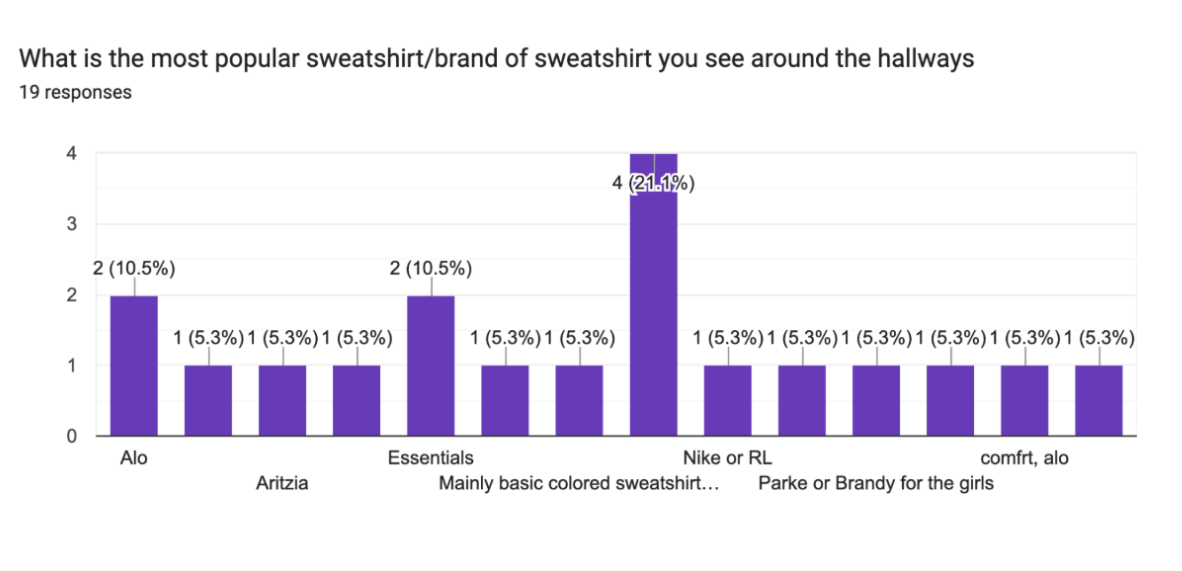
Figure 6:
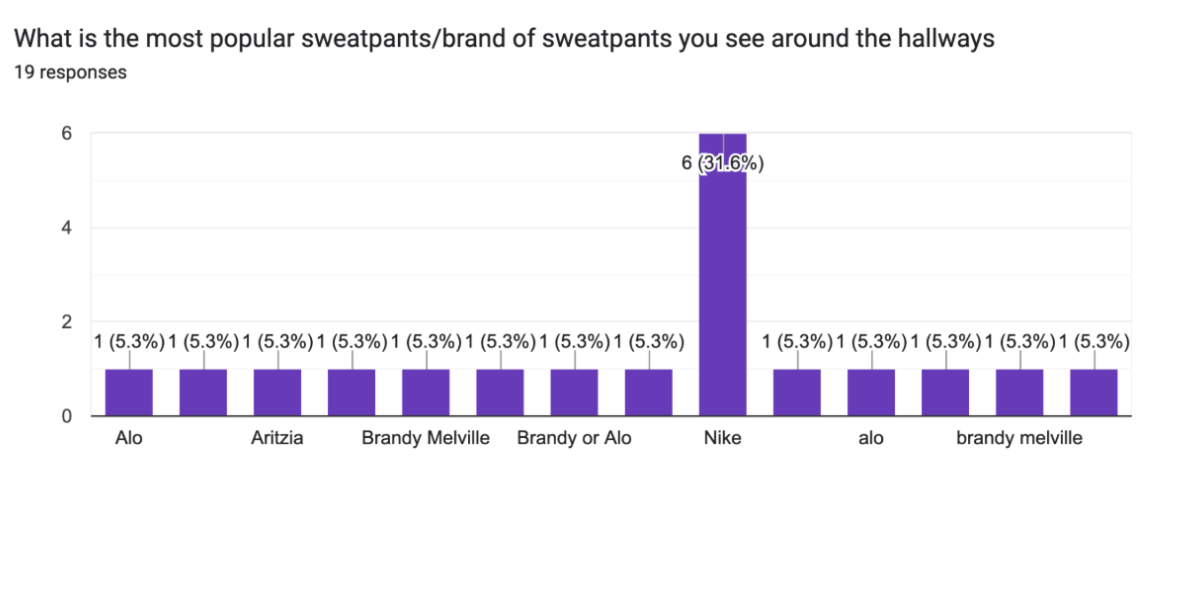
Figure 7: